Your Inspection Software Is Great at Paperwork. It Should Be Catching Faults.
Most inspection software digitizes the checklist and stops there. The next step is software that looks at the photo and tells the crew what is wrong, before they leave the site.
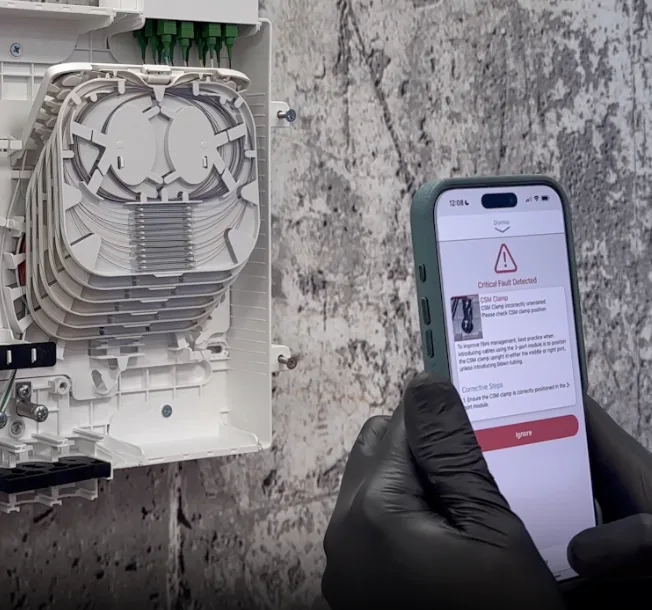
The clipboard went digital, and then it stopped
The last decade of inspection software did one big thing well: it killed the paper form. Crews used to fill out a clipboard, snap a few photos on a separate camera, and someone back at the office stapled it all together days later. Now the checklist lives on a phone, the photos attach automatically, GPS and timestamps come for free, and the report lands in a dashboard before the crew has left the car park.
That is real progress, and nobody wants to go back. But it is worth being honest about what that software actually does. It captures. It routes. It stores. What it almost never does is look at the photo and tell you whether the work is right.
We digitized the paperwork around the inspection. We never digitized the judgement at the center of it.
What the checklist quietly assumes
A digital checklist is only as good as the person filling it in. Every 'pass' box rests on a human being looking at the right thing, recognizing a fault, and choosing to record it, at the end of a long day, on the twentieth site, in bad light. The software trusts that judgement completely and checks none of it.
So the failure modes are predictable, and they have nothing to do with the software being buggy:
- A fault is photographed but never flagged, because the inspector did not notice it in the moment
- Two inspectors grade the same installation differently, because 'acceptable' lives in their heads, not in the system
- A box gets ticked to clear the queue, and the photo that would have contradicted it sits in storage, unread
- The defect only becomes visible weeks later, when a reviewer or a customer finds it, and now it is a repeat visit
None of these show up as software problems. They show up as rework, repeat truck rolls, inconsistent reports, and the slow erosion of trust in the data. The dashboard looks complete. The field reality is messier than the dashboard.
The missing layer: software that sees the fault
The interesting question is no longer 'how do we capture the inspection?' That is solved. The question is 'can the software understand what it captured?' That is the layer most tools are missing, and it is the layer that changes the economics of inspection.
Concretely, it means a model that looks at the photo the moment it is taken and answers the questions the checklist only assumes: is the cover closed, is the screw present, is the clamp seated, is this the right part in the right place. Not a generic 'detect objects' model, but one taught on your equipment and your definition of a fault, running fast enough to give the crew an answer while they are still standing in front of the work.
That last part matters more than anything. A defect caught at the office is a phone call and a second visit. The same defect caught on site, while the crew is still there, is a thirty-second fix. The value of inspection software is not in how neatly it files the problem; it is in how early it surfaces it.
What changes when the software catches faults
When the analysis moves into the moment of capture, a few things shift at once:
- Consistency stops depending on which inspector showed up. The same standard is applied to every photo, every time
- Rework drops, because the cheapest moment to fix a fault is before the crew leaves
- The report becomes evidence, not just a record. A 'pass' is backed by an image the software actually assessed
- Your best inspectors' judgement gets captured once and applied everywhere, instead of walking out the door when they retire
This is not about replacing the inspector. It is about giving the inspector a second set of eyes that never gets tired, never skips the twentieth site, and grades everything the same way.
The honest caveat
There is a catch, and we would rather say it plainly: a model that understands your equipment cannot be bought off the shelf. A general-purpose AI knows a great deal about the world and almost nothing about your enclosures, your fittings, and the specific ways your installations pass and fail. To get reliable detection on real faults, the model has to be taught on your own photos and your own definition of right and wrong.
For a long time that meant data scientists, long projects, and budgets that only the largest operators could justify. That is the part that has actually changed. Teaching a model on your own faults is now something an inspection or quality team can do directly, without writing code, in days rather than months.
Where Forge fits
This is the gap Forge is built to close. Instead of stopping at the digital checklist, your team labels real examples of the defects you care about, missing screws, loose clamps, open covers, whatever matters on your sites, and Forge trains a purpose-built model on them and deploys it to your crews' phones. The capture stays as smooth as it is today; what changes is that the software now understands what it just captured.
If your current tools are great at collecting photos but blind to what is in them, that is exactly the problem worth fixing. Bring us the faults your inspections keep missing, and we will show you what software trained on your own work can catch.
A note on scope. This piece is about the category, not a benchmark. The specific accuracy results behind Forge, including how purpose-trained models compare to general-purpose AI on real field photos, are covered in our other posts. The point here is simpler: capturing an inspection and understanding it are two different jobs, and most software only does the first.